“its fruit” search results (21000)
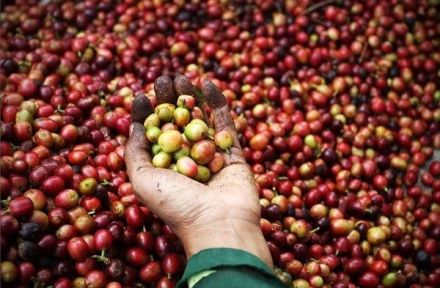
From the planting of coffee trees to the harvest of coffee beans
Coffee trees take 3-5 years from planting to fruiting. 6-10 years of coffee trees are the most likely to bear fruit, about 15-20 years, is the harvest period. Coffee trees are usually bred in nurseries and grow into saplings, and then moved to coffee farms a year later, in full compliance with the way the Arabs planted and cultivated coffee trees. Coffee trees will continue to take root downward and upward in the first four or five years of their growth.
2015-03-27 Coffee planting coffee beans harvest process coffee fruit 3-5 year
Processing of raw coffee beans picking of coffee fruits
The picking of coffee fruit is divided into manual picking, which leads to an increase in the cost of coffee because of the high labor cost. But manual picking can select coffee fruits that are ripe and suitable. It is generally suitable for coffee that can be sold at a higher price, and will not be unable to earn money because the cost is too high. Machine picking, the cost is not high, but the machine can not distinguish whether the coffee fruit is ripe or not, can only put all the coffee
2014-09-18 Coffee knowledge coffee raw beans coffee fruits picking coffee
Processing of Fruit of High-quality Coffee
Coffee is the fruit of a Rubiaceae plant growing about 6000 feet above sea level, distributed on the world's narrow subtropical axis; coffee trees grow green all the year round and can grow up to 20 feet tall, and are generally controlled at 8 to 10 feet for easy harvest. It takes three to five years for the coffee tree to bear fruit. First of all, it produces small white flowers that resemble jasmine in shape and size, and then wither and bear deep fruit.
2015-01-19 Boutique coffee common sense fruit processing growing at 000 feet above sea level
Introduction of Honduran coffee beans with rich and mellow taste and non-astringent and sour taste
High-quality coffee in Honduras uses water washing to deal with coffee beans, usually after soaking, when the defective fruit will surface, it can be discarded first. Then put the good fruit into the fruit peeling machine and peel off the peel with the rotating force of the machine. Peeled fruits are screened by machines to select fruits of high quality. Usually the bigger the fruit.
2016-06-23 With rich thick taste not astringent not sour Honduras coffee beans
Summary of processing methods and characteristics of Coffee Fruit
Coffee is the fruit of a Rubiaceae plant growing about 6000 feet above sea level, distributed on the world's narrow subtropical axis; coffee trees grow green all the year round and can grow up to 20 feet tall, and are generally controlled at 8 to 10 feet for easy harvest. It takes three to five years for the coffee tree to bear fruit. First of all, it produces small white flowers that resemble jasmine in shape and size, and then wither and bear deep fruit.
2015-03-04 Coffee common sense fruit processing methods characteristics overview coffee growth altitude
Summary of the processing and characteristics of Coffee Fruit
Coffee is the fruit of a Rubiaceae plant growing about 6000 feet above sea level, distributed on the world's narrow subtropical axis; coffee trees grow green all the year round and can grow up to 20 feet tall, and are generally controlled at 8 to 10 feet for easy harvest. It takes three to five years for the coffee tree to bear fruit. First of all, it produces small white flowers that resemble jasmine in shape and size, and then wither and bear deep fruit.
2015-04-24 Coffee common sense fruit processing characteristics overview coffee growing in altitude 000
A Summary of the processing and characteristics of Coffee Fruit
Coffee is the fruit of a Rubiaceae plant growing about 6000 feet above sea level, distributed on the world's narrow subtropical axis; coffee trees grow green all the year round and can grow up to 20 feet tall, and are generally controlled at 8 to 10 feet for easy harvest. It takes three to five years for the coffee tree to bear fruit. First of all, it produces small white flowers that resemble jasmine in shape and size, and then wither and bear deep fruit.
2014-11-26 Coffee knowledge coffee common sense coffee fruit
Introduction to Santa Barara Manor in Honduras Coffee Flavor Manor
High-quality coffee in Honduras uses water washing to deal with coffee beans, usually after soaking, when the defective fruit will surface, it can be discarded first. Then put the good fruit into the fruit peeling machine and peel off the peel with the rotating force of the machine. Peeled fruits are screened by machines to select fruits of high quality. Usually the bigger the fruit.
2016-08-01 Flavor quite good Honduras coffee taste manor producing area introduction Sanba la
Classification and causes of defective beans in SCAA Coffee SCAA level: Italian mixed beans with secondary defects
CAA level: whole sour bean is a first-level defect; one whole sour bean = a complete defect name: local sour bean SCAA level: local sour bean is a secondary defect; less than half of a bean is sour bean, 3 beans = 1 complete defect cause: agriculture and treatment. Sour beans are caused by fermentation, and they are contaminated by microorganisms in many places in the process of harvest and treatment.
2016-07-14 SCAA Coffee defects Category cause Grade II Italian blending
Points for attention in Coffee planting
When the fruit of the coffee tree is picked, the four layers of skin wrapped around the coffee beans need to be removed in order to finally get the coffee beans needed. The main methods to remove the outer epidermis of coffee beans are "wet treatment" and "dry treatment".
2014-07-09 Coffee knowledge coffee tree planting planting matters coffee encyclopedia
General knowledge of Fine Coffee processing and characteristics of Coffee Fruit
Coffee is the fruit of a Rubiaceae plant growing about 6000 feet above sea level, distributed on the world's narrow subtropical axis; coffee trees grow green all the year round and can grow up to 20 feet tall, and are generally controlled at 8 to 10 feet for easy harvest. It takes three to five years for the coffee tree to bear fruit. First of all, it produces small white flowers that resemble jasmine in shape and size, and then wither and bear deep fruit.
2015-02-11 Boutique coffee common sense fruit processing characteristics overview growing altitude
How did the name of coffee come from?
It starts with the Ethiopian legend of the 5th century AD, when the sheep of the shepherd boy Kadi was so excited after eating a strange red fruit that Kadi and his companions could not help but give it a try, feeling refreshed and weary. Spread ten, ten hundred, this red fruit has since become a part of the local food culture, this red fruit is coffee. After that, coffee was introduced into Arabia.
2016-05-29 Coffee name how thing AD 5th century Ethiopia legend talking about
Temperatures Mild Honduran coffee plantations Flavor Taste Growing environment Introduction Santa Barbara
Honduras 'high-quality coffee uses water washing to treat coffee beans, usually after soaking, in the soaking time, defective fruit will surface, can be discarded first. The good fruit is then placed in a fruit peeler and peeled off by the rotating force of the machine. The peeled fruits are screened by machines to select excellent quality fruits. usually larger fruit
2016-08-04 temperature mild honduras coffee estate appellation flavor taste cultivation ring
What are defective beans? how to calculate defective beans?
High-quality coffee beans are refined by water treatment. The coffee beans with less impurities can be obtained by the water washing method, but if the water quality and time are not properly controlled during the fermentation process, the coffee beans will easily be infected with the sour taste of excessive fermentation. and dry beans also need to pay attention to timely re-inspection to prevent coffee beans from being contaminated by wet ground and sundries. Processed
2016-06-03 Flaws yes what how?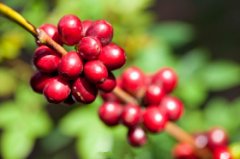
What does coffee fruit look like?
What we see every day is roasted coffee beans, and at most we have seen yellow-green coffee beans. That coffee bean is the most fruit. What is it like at first? What we usually see is a bit like cherries, so we sometimes call coffee cherries. Generally speaking, each coffee fruit contains two coffee beans. The beans are covered with pericarp, pulp and pectin.
2015-06-04 Coffee fruit exactly what is looks we everyday see all roast
Basic knowledge of boutique coffee the growth of coffee trees
The growth and fruit of coffee trees varies with different varieties / environmental conditions. In the high altitude area of Yunnan, the small seed coffee cultivated has the advantages of cold climate, large cloud cover, short light and slow plant growth, but the branches develop into sturdy backbone branches after the first branch bears fruit, and the second / third branch has strong ability to produce. The growth is exuberant and the fruit is dense, which is the main fruiting branch, so it is suitable to adopt single trunk shaping. Two / three
2014-12-19 Boutique coffee basics common sense growth results conditions varieties
Yunnan Coffee Plantation in Spring all year round
Coffee bean flowers are also very beautiful, dark green leaves on the branches, with a strong aroma of white flowers, after a few months, bear cherry-like red fruit. Yunnan coffee belongs to Arabica tree species, so it is self-pollinated without insects (insects are only interested in the flowers of Robster trees). Coffee
2016-07-11 Spring all year round Yunnan coffee plantations introductions manors coffee beans flowers too
From the planting of coffee trees to the harvest of coffee beans, how to raise coffee trees
Coffee trees take 3-5 years from planting to fruiting. 6-10 years of coffee trees are the most likely to bear fruit, about 15-20 years, is the harvest period. Coffee trees are usually bred in nurseries and grow into saplings, and then moved to coffee farms a year later, in full compliance with the way the Arabs planted and cultivated coffee trees. Coffee trees will continue to take root downward and upward in the first four or five years of their growth.
2015-11-05 Coffee planting coffee beans harvest how coffee fruit 3-5 year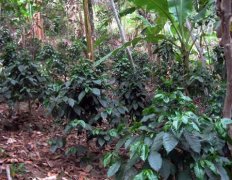
Production of coffee beans coffee output
Coffee trees take 3-5 years from planting to fruiting. 6-10 years of coffee trees are the most likely to bear fruit, about 15-20 years, is the harvest period. Coffee trees are usually bred in nurseries and grow into saplings, and then moved to coffee farms a year later, in full compliance with the way the Arabs planted and cultivated coffee trees. Coffee trees will continue to take root downward and upward in the first four or five years of their growth.
2014-09-25 Coffee bean production coffee output
The various parts of the coffee plant decompose the shallow root crop of coffee.
Coffee is a shallow root crop, and the plants propagated with seeds have conical roots. Root system refers to the general name of root. The root morphological distribution and depth of shade varieties / soil conditions and agricultural technical measures are different. From the point of view of varieties, the roots of small / medium grain species are shallower, while those of large grain species are deeper. Under normal circumstances, there is a thick and short taproot and many well-developed lateral roots. Yunnan small-grain coffee has a 4-year-old fruit.
2015-09-23 Coffee plants parts decomposition shallow roots crops coffee species